
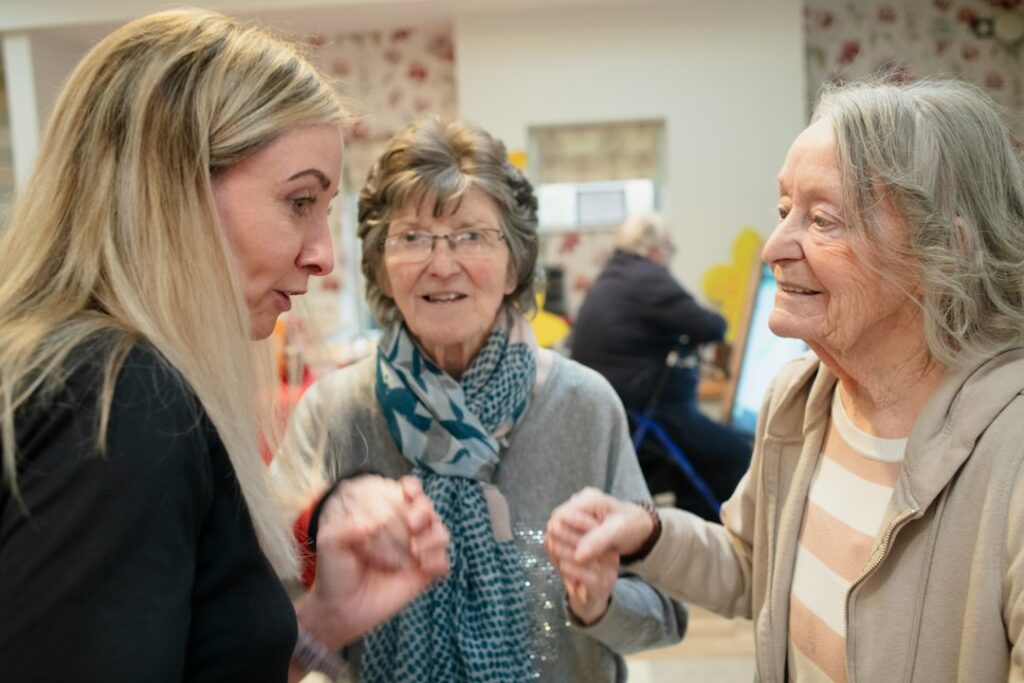
Assisted living communities bring together residents with different routines, health needs, communication styles, and personal histories. Conflict can develop over noise, shared spaces, schedules, caregiving decisions, visitors, belongings, or misunderstandings between residents, families, and staff.
Most disagreements can be managed safely when concerns are addressed early, discussed respectfully, and brought to the right person. The goal is not simply to “win” an argument. It is to protect dignity, preserve relationships, and maintain a living environment where residents feel secure.
What types of conflict are common in assisted living?
Common conflicts involve daily routines, personal boundaries, communication, and decisions about care. A disagreement may appear minor at first but become more serious if frustration builds.
Examples include:
- A resident feels another person is taking over a common area.
- Two residents disagree about television volume, lighting, temperature, or seating.
- A family member believes a resident is not receiving enough attention.
- A resident refuses help with bathing, medication reminders, meals, or mobility.
- A roommate enters personal space or handles belongings without permission.
- A resident feels excluded from activities or conversations.
- Staff members receive different instructions from family members.
- A person with memory loss becomes suspicious, frightened, or verbally upset.
Some behavior that looks like hostility may actually be connected to pain, illness, hearing loss, poor sleep, medication effects, confusion, or fear. Understanding the possible cause can change the response.
What should a resident do during a disagreement?
The safest first step is to pause, create space, and avoid responding while angry. A calm conversation is more likely to solve the problem than raised voices, threats, insults, or physical confrontation.
A resident can try to:
1. Move to a quieter or more public area if the situation feels tense.
2. Use a short statement such as, “I felt uncomfortable when that happened.”
3. Describe the specific behavior rather than attacking the other person’s character.
4. Ask for a practical change, such as lowering the volume or keeping personal items in one’s own room.
5. End the conversation if either person is becoming more upset.
6. Tell a trusted staff member what occurred, especially if the problem continues.
A resident should not be expected to handle a serious conflict alone. If there is pushing, hitting, intimidation, unwanted touching, threats, stalking, or repeated harassment, staff should be informed promptly.
How can families raise a concern without escalating the situation?
Families are more effective when they bring clear observations instead of broad accusations. Saying, “My mother has seemed frightened after evening meals on three occasions,” gives staff something specific to investigate. Saying, “Nobody is paying attention,” may communicate distress but does not identify the issue clearly.
Before speaking with staff, it may help to write down:
- What happened
- The date, time, and location
- Who was present
- What the resident said or did
- Whether there were injuries, missed care, or changes in mood
- What outcome would make the situation safer or more manageable
A private conversation is usually better than confronting another resident or family in a hallway or dining room. Staff may also be limited in what they can disclose about another resident because of privacy requirements. They can still listen to the concern, document it, and explain what steps are available.
Families should ask who is responsible for following up and when an update can reasonably be expected. Keeping communication factual and consistent can reduce confusion among relatives and caregivers.
How should staff respond to resident-to-resident conflict?
Staff should first assess immediate safety, separate people when needed, and look for injuries or urgent medical concerns. After the situation is stable, each person should have an opportunity to describe what happened without being interrupted.
A useful response often includes:
- Listening to each person separately
- Checking for pain, illness, confusion, fear, or sensory problems
- Reviewing recent changes in medication, sleep, routine, or environment
- Identifying triggers such as crowded spaces, noise, waiting, or personal belongings
- Setting clear boundaries about threats, touching, and property
- Agreeing on practical adjustments
- Documenting the event and monitoring for recurrence

Punishment alone rarely resolves repeated conflict, particularly when cognitive changes are involved. A person may need a different seating arrangement, a quieter activity, more time to respond, improved hearing support, or redirection before frustration becomes aggression.
What if memory loss or confusion is involved?
Conflict involving dementia or other cognitive impairment should be approached as a safety and communication concern, not simply as a character problem. A resident may believe someone stole an item, entered a room, or caused harm even when the details are unclear or inaccurate.
Arguing about facts may increase distress. A calmer response is to acknowledge the emotion, provide reassurance, and redirect attention. For example: “That sounds upsetting. Let’s look for the item together,” may work better than insisting, “That never happened.”
Staff and families should watch for patterns. Agitation that occurs at the same time each day may be related to fatigue, hunger, changes in lighting, or overstimulation. A sudden change in behavior can also signal illness or discomfort and deserves prompt attention.
When does a disagreement become a safety issue?
A conflict requires immediate attention when there is a threat of harm, physical contact, repeated intimidation, sexual misconduct, unexplained injury, financial exploitation, or fear of retaliation. Residents should report concerns even if they are uncertain whether the behavior “counts” as abuse.
If someone is in immediate danger, move away if possible and seek staff assistance right away. Emergency help may be necessary when there is serious injury, a weapon, a medical crisis, or an immediate threat.
A resident who feels ignored after reporting a serious concern should repeat the report to a supervisor or another responsible member of the care team. Written notes can help establish what was reported and when. Safety concerns should not be dismissed as ordinary personality differences.
How can conflict be prevented in a local assisted living setting?
Prevention often depends on predictable routines, clear communication, and respect for personal space. Seasonal conditions in Kittanning can also affect daily life. Winter weather may keep residents indoors for longer periods, while heat, storms, or transportation disruptions can alter schedules and increase frustration.
Helpful preventive measures include:
- Explaining schedule changes before they occur
- Offering quiet areas as well as social spaces
- Making sure glasses, hearing devices, and mobility aids are available
- Labeling personal belongings when appropriate
- Asking permission before moving or handling a resident’s items
- Providing choices instead of unnecessary demands
- Allowing extra time for residents who process information slowly
- Reviewing roommate, dining, and activity arrangements when tension continues
- Keeping families informed about meaningful changes in routine or condition
Respectful communication is especially important in shared housing. Residents may have different expectations about privacy, conversation, cleanliness, visitors, and use of common rooms. Clear boundaries help prevent small frustrations from becoming lasting disputes.
What rights and responsibilities do residents have?
Residents have the right to be treated with dignity and to raise concerns about care, safety, privacy, and living conditions without intimidation. They also have a responsibility to respect other residents, follow reasonable community rules, and avoid threatening or abusive conduct.
A resident does not lose the right to be heard because of age, disability, memory loss, or a history of difficult behavior. At the same time, personal preferences do not justify harming others. A fair solution recognizes both individual needs and the safety of the community.
The most useful question is often: “What needs to change so this situation is safer and more respectful?” That question keeps attention on practical solutions rather than blame.
