
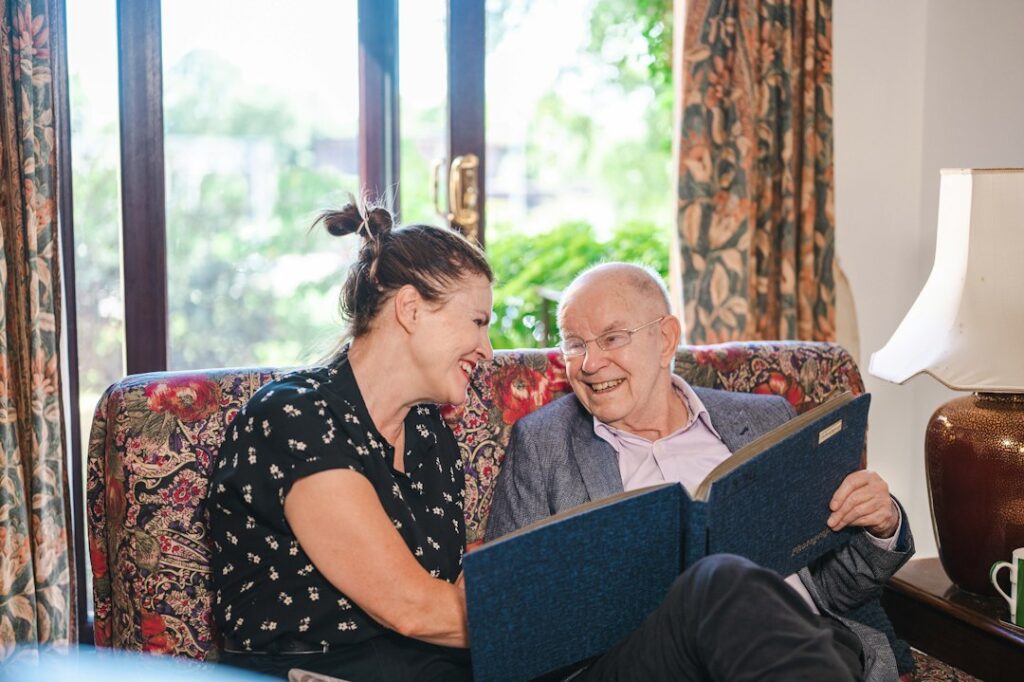
What are intergenerational activities?
Intergenerational activities bring older adults and younger people together for purposeful interaction, learning, and recreation. In assisted living, these activities may involve children, teenagers, young adults, family members, students, or community groups.
For residents in Kittanning, PA, the most useful programs are usually simple, familiar, and easy to adapt. A shared craft project, conversation about local history, music session, gardening activity, or reading hour can create meaningful contact without requiring elaborate arrangements.
The goal is not merely to keep residents busy. Well-planned interaction gives people of different ages a chance to contribute, listen, teach, and form connections.
How can these activities benefit older adults?
Intergenerational activities can support emotional well-being by reducing feelings of loneliness and increasing a resident’s sense of belonging. A regular visit from younger people may give residents something to anticipate and discuss with others.
Many older adults also enjoy being seen as knowledgeable and capable. They may teach a card game, explain how a household task was once done, share family traditions, or describe changes they have witnessed in the community. These exchanges reinforce identity and personal history.
Possible benefits include:
- More frequent social interaction
- Greater confidence in conversation
- Opportunities to share memories and skills
- Increased motivation to participate in daily activities
- A stronger sense of purpose
- Positive changes in mood and interest
These effects are not automatic. Activities work best when residents are treated as participants rather than spectators and when the interaction is respectful, unrushed, and suited to individual abilities.
What do younger people gain from visiting assisted living residents?
Younger participants can develop patience, empathy, listening skills, and a broader understanding of aging. Spending time with older adults may also challenge common stereotypes, such as the idea that all seniors are frail, isolated, or unable to learn new things.
Children may benefit from hearing stories that connect personal experiences with history. Teenagers and young adults may gain confidence in conversation and a better understanding of family caregiving. Younger visitors can also discover shared interests with residents through music, games, art, technology, cooking, or sports memories.
The relationship should be mutual. A young person might help a resident use a tablet, while the resident explains a favorite recipe or teaches a traditional game. Both people contribute something valuable.
Which activities work well in assisted living?
The best choices are flexible, familiar, and accessible. Activities should allow residents to participate at different physical, cognitive, and communication levels.
Examples include:
Story and memory projects
Residents can describe childhood routines, seasonal traditions, school experiences, or important community events. Younger participants may record stories with permission, create written summaries, or make a shared memory display.
Questions should be open-ended and optional. No resident should feel pressured to discuss painful memories, family matters, or personal information.
Reading and conversation groups
A younger visitor can read short stories, newspaper features, poems, or historical passages aloud. Residents may then discuss the subject, ask questions, or compare it with their own experiences.
Large-print materials and good lighting can make participation easier for people with vision changes.
Music and movement
Singing familiar songs, learning about different musical eras, or playing simple rhythm instruments can include residents with varying communication abilities. Gentle seated movement may also be appropriate, provided it follows individual care instructions.
Music is particularly useful because residents do not need to remember every word or speak at length to take part.
Arts, crafts, and seasonal projects
Painting, decorating, collage-making, assembling greeting cards, and creating seasonal displays provide a shared task that reduces pressure to maintain conversation continuously.
Projects should avoid tiny pieces or complicated steps when residents have limited vision, reduced hand strength, or memory-related challenges. Larger materials and demonstrations can make the activity more inclusive.
Gardening and nature activities
Container gardening, planting herbs, arranging flowers, or observing birds can connect generations through practical work. In a community with cold winters and changing weather, indoor seed-starting or nature-themed projects can continue when outdoor conditions are unsuitable.
Raised containers, seated work areas, and lightweight tools may help residents participate more comfortably.
Technology exchanges
Younger visitors may help residents view family photographs, send messages, or use video calls. Residents can respond by sharing knowledge that is not found on a screen, such as family traditions, mechanical skills, cooking methods, or local stories.
Technology assistance should be patient and limited to the resident’s comfort level. A resident should never be made to feel embarrassed for not knowing how to use a device.
How should activities be adapted for residents with dementia?
Residents with dementia can participate meaningfully when activities focus on enjoyment rather than performance. Short sessions, familiar objects, music, pictures, and simple choices are often more effective than complicated instructions.

A resident may not remember a visitor’s name later but can still benefit from the comfort and positive emotion of the interaction. Repeating introductions, using visual cues, and allowing extra response time can reduce frustration.
Helpful practices include:
- Offer one step at a time
- Use calm voices and clear demonstrations
- Avoid correcting every mistake
- Accept nonverbal participation
- Watch for signs of fatigue or overstimulation
- End the activity while the experience is still positive
Children should receive age-appropriate guidance about memory loss. They can be told that a resident may repeat a question or forget a conversation and that this is not intentional rudeness.
What safety and privacy issues should families consider?
Intergenerational activities require planning around supervision, infection prevention, mobility, allergies, and privacy. Children and visitors should follow the assisted living community’s rules about hand hygiene, illness symptoms, photography, and physical contact.
Residents should be able to decline participation without criticism. Permission is especially important before taking photographs, recording stories, sharing personal details, or posting anything online.
Activities should also account for wheelchairs, walkers, hearing devices, oxygen equipment, and fall risks. Crowded spaces, loose craft materials, loud music, or poorly placed furniture can create avoidable hazards.
For residents in Kittanning, seasonal conditions may affect attendance and transportation. Snow, ice, heavy rain, and cold temperatures can make outdoor visits difficult, so indoor alternatives are useful. A dependable schedule is helpful, but flexibility is necessary when travel conditions or health concerns change.
What makes an intergenerational program successful?
Consistency matters more than size. A small group that meets regularly may create stronger relationships than a large event held only once.
Activities are most successful when they:
- Match residents’ interests and abilities
- Give younger participants a clear but flexible role
- Allow natural conversation rather than forcing personal questions
- Include quiet options for people who prefer observation
- Keep sessions short enough to prevent fatigue
- Measure success by connection, not by attendance alone
Staff and family members can ask residents what they enjoyed, what felt uncomfortable, and what they would change. Feedback helps prevent activities from becoming repetitive or centered only on the preferences of younger visitors.
A successful exchange may be as simple as a resident teaching a child how to shuffle cards, a teenager listening to a story about school long ago, or two generations working side by side on a shared project. These moments can strengthen social connection while honoring the experience, abilities, and choices of every participant.
